
• All Methods
    • Strategize
      • 5D Framework
      • Break Down 4
      • Business Model Canvas
      • Competitive Analysis
      • Could, Should, Must
      • Dot Coding
      • Eisenhower Matrix
      • Future Trends
      • Golden Circle
      • HEART Framework
      • How Might We
      • Innovation Board
      • Ishikawa Diagram
      • Knowns and Unknowns Framework
      • KPI Tracking
      • Minimum Viable Product
      • One-Minute-Pitch
      • Stakeholder Map
      • SWOT Analysis
      • User Stories
      • Value Proposition
    • Observe
      • 5 Whys
      • 6 Thinking Hats
      • AEIOU Framework
      • Challenge Assumptions
      • Content Audit
      • Contextual Inquiry Plan
      • Emotional Journey Map
      • Empathy Map
      • Field Study
      • Focus Groups
      • Jobs-to-be-done
      • Journey Mapping
      • Mental Models
      • Mobile Diaries
      • Mystery Shopping
      • Netnography
      • Observation
      • Personas
      • Poems
      • Product Love Letters
      • Search-Log Analysis
      • Social Media Monitoring
      • Surveys
      • User Interviews
    • Ideate
      • 6-3-5 Brainwriting
      • Bodystorming
      • Brainstorming
      • Card Sorting
      • Collage
      • Crazy Eights
      • Dark Horse Prototyping
      • Mind Mapping
      • Moodboards
      • SCAMPER
      • Service Blueprints
      • Storyboards
      • Walt Disney Method
      • Worst Possible Ideas
      • Wow-How-Now Matrix
    • Validate
      • A/B Testing
      • Click Dummy
      • Concept Testing Plan
      • Eye Tracking
      • High-Fidelity Prototyping
      • Hypothesis Testing
      • Lessons Learned
      • Low-Fidelity Prototyping
      • Pluralistic Walkthrough
      • Poster Session
      • Remote Usability Test
      • User Testing
      • Wizard of Oz
      • World Café
    • Warm-up
      • 5 Whys
      • Brainstorming
      • Break Down 4
      • Crazy Eights
      • Destroy and Defend
      • Emoji Challenge
      • Hidden Similarities
      • Impromotion
      • Mind Mapping
      • Product Pitch
      • The Aliens Have Landed
      • Touch Blue
      • Two Truths and a Lie
      • Viewpoint Spectrogram
      • What's on your Desk?
  • Workshop Bundles
  • About us
  • Meet the Creators
  • Get Support
  1. UX Strategy Kit
  2. Methods
  3. Ishikawa Diagram
beginnerstrategize
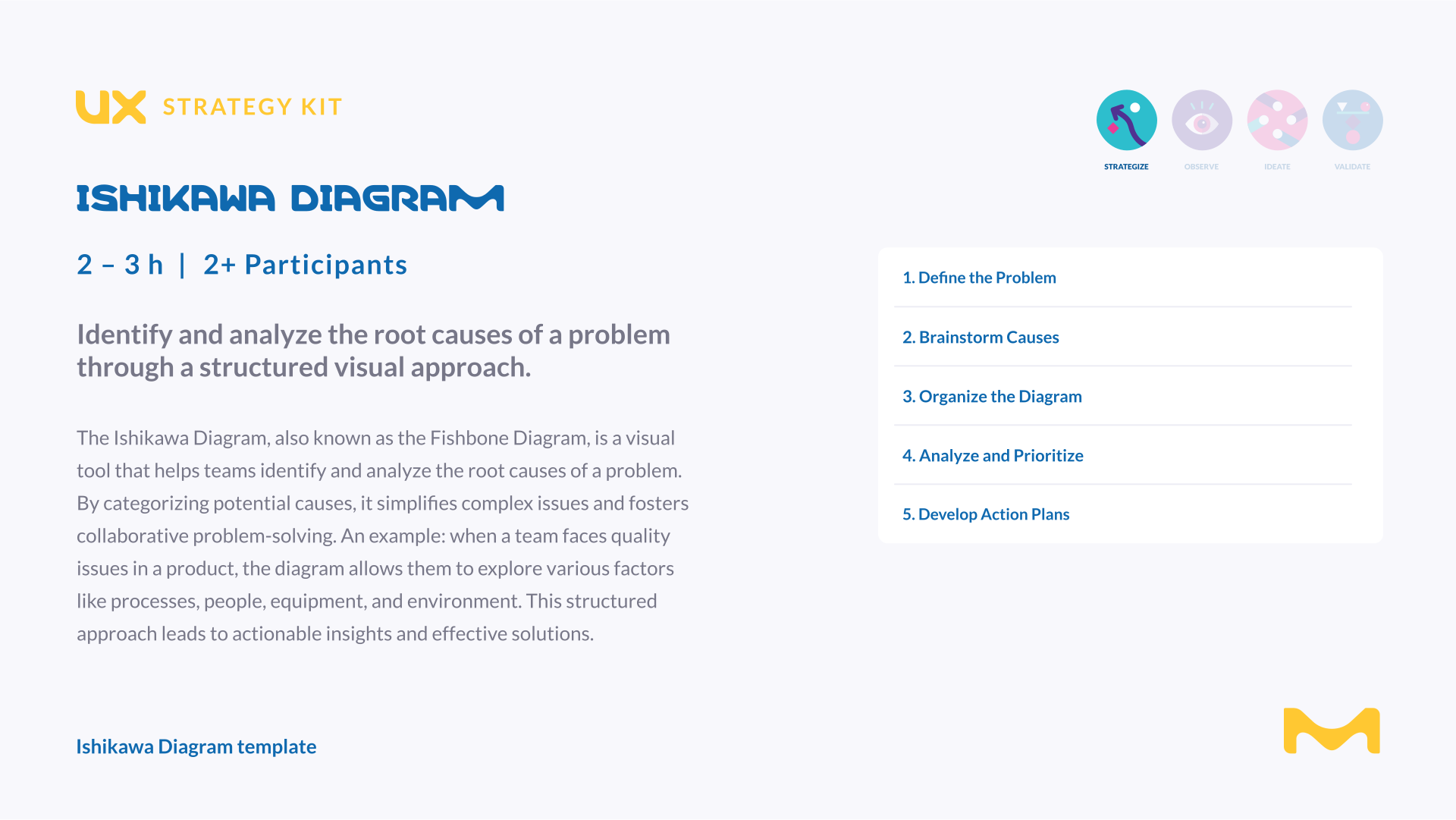
Ishikawa DiagramIdentify and analyze the root causes of a problem through a structured visual approach.
2 - 3 h2+ Participantsworkshopbrainstormingproblem
+2
Open in FigJam
Summary

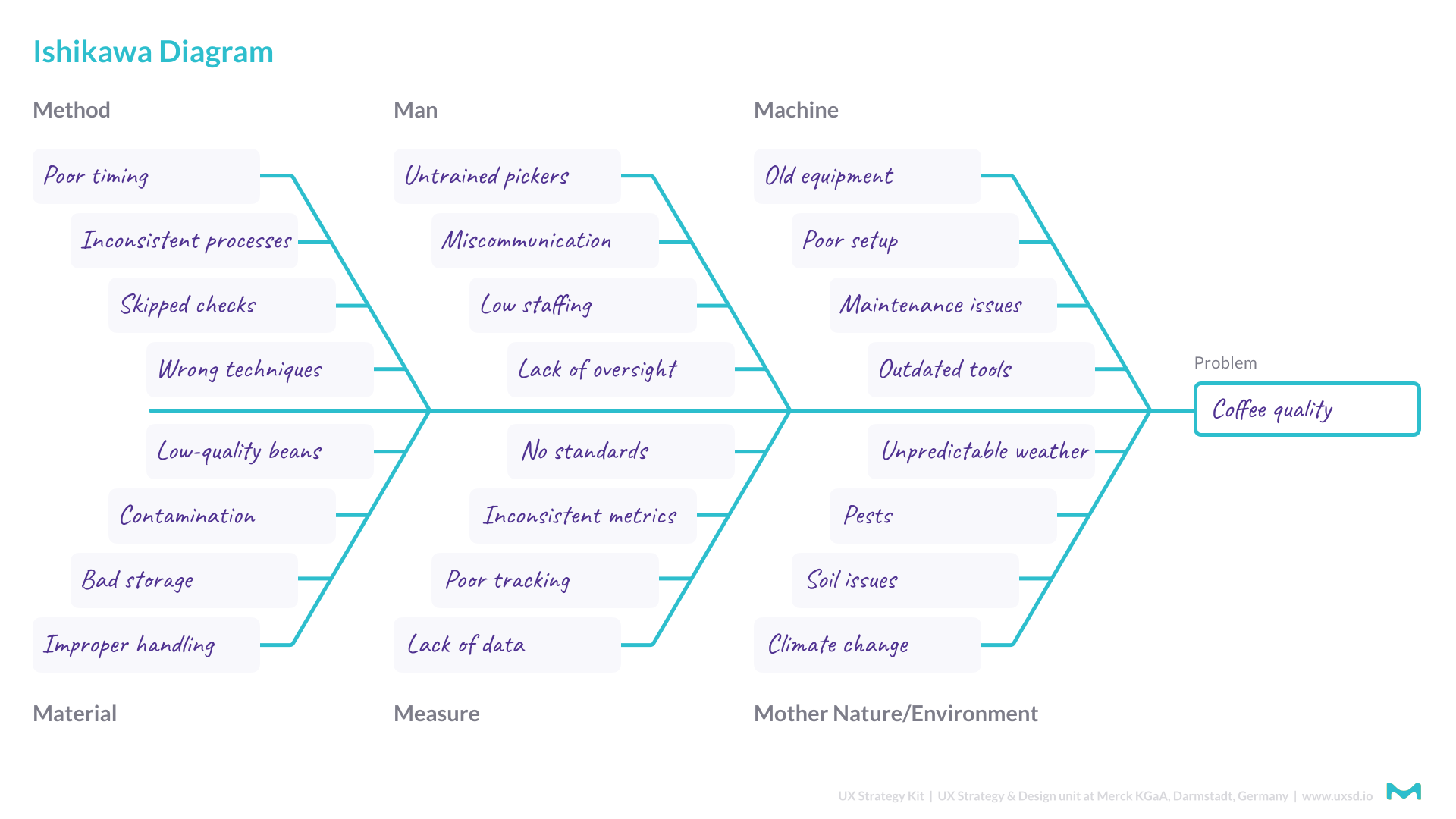
The Ishikawa Diagram, also known as the Fishbone Diagram, is a visual tool that helps teams identify and analyze the root causes of a problem. By categorizing potential causes, it simplifies complex issues and fosters collaborative problem-solving. An example: when a team faces quality issues in a product, the diagram allows them to explore various factors like processes, people, equipment, and environment. This structured approach leads to actionable insights and effective solutions.

Step-by-step
  1. Clearly articulate the problem you want to address. This will be the "head" of the fishbone. Make sure it is specific and measurable.

  2. Gather your team for a brainstorming session. For each of the predefined 6M categories (Method, Man, Machine, Material, Measure, Mother Nature/Environment), encourage participants to suggest specific causes related to the problem. Capture all ideas, regardless of how small.

  3. Use the provided fishbone template to visualize the causes:

    • Place the problem statement at the head.
    • Fill in the branches for each major category with the identified causes.
  4. Review the completed diagram as a team. Discuss which causes are the most significant contributors to the problem and prioritize them for further investigation.

  5. For the top causes identified, create actionable plans to address each issue. Assign responsibilities and set timelines for implementation.

What you need
  • Ishikawa Diagram template
External resources
  • What is a Fishbone Diagram (Ishikawa Diagram)?
    by Eye on Tech
Do you have a question?
These methods might seem simple, but applying them in a real project is another story. We’re there to help. If you have any questions, do not hesitate to get in touch with us at the User Experience Strategy & Design team.
Ask Away!
Explore similar methods
Emoji Challengewarm-up
2+ Participants
10 – 20 min

Start a meeting with a relaxed and open minded atmosphere with this emoji quiz.

5 Whysobserve
1 – 2 Participants
5 – 15 min

This is a very simple method for digging deep into the mind and background of users and their behaviour.

Value Propositionstrategize
2+ Participants
60 – 90 min

A short statement that convinces the customer to invest in your product by letting him know the product's unique selling point and which problem it solves.

A/B Testingvalidate
10+ Participants
1 – 5 d

Evaluate which of two versions of a website, product or software works best for the user.

Social Media Monitoringobserve
1+ Participants
weeks – months

Compute the value of a brand or company.

© Merck KGaA, Darmstadt, Germany, 2025.
Follow us
  • Dribbble
  • Instagram
  • Medium
  • Behance
Categories
  • Strategize
  • Observe
  • Ideate
  • Validate
  • Warm-up
Learn more
  • About Us
  • User Experience Strategy & Design
  • Liquid Design System
Legal
  • Data Privacy
  • Terms and Conditions
  • Imprint
Follow us
  • Dribbble
  • Instagram
  • Medium
  • Behance