
• All Methods
    • Strategize
      • 5D Framework
      • Break Down 4
      • Business Model Canvas
      • Competitive Analysis
      • Could, Should, Must
      • Dot Coding
      • Eisenhower Matrix
      • Future Trends
      • Golden Circle
      • HEART Framework
      • How Might We
      • Innovation Board
      • Ishikawa Diagram
      • Knowns and Unknowns Framework
      • KPI Tracking
      • Minimum Viable Product
      • One-Minute-Pitch
      • Stakeholder Map
      • SWOT Analysis
      • User Stories
      • Value Proposition
    • Observe
      • 5 Whys
      • 6 Thinking Hats
      • AEIOU Framework
      • Challenge Assumptions
      • Content Audit
      • Contextual Inquiry Plan
      • Emotional Journey Map
      • Empathy Map
      • Field Study
      • Focus Groups
      • Jobs-to-be-done
      • Journey Mapping
      • Mental Models
      • Mobile Diaries
      • Mystery Shopping
      • Netnography
      • Observation
      • Personas
      • Poems
      • Product Love Letters
      • Search-Log Analysis
      • Social Media Monitoring
      • Surveys
      • User Interviews
    • Ideate
      • 6-3-5 Brainwriting
      • Bodystorming
      • Brainstorming
      • Card Sorting
      • Collage
      • Crazy Eights
      • Dark Horse Prototyping
      • Mind Mapping
      • Moodboards
      • SCAMPER
      • Service Blueprints
      • Storyboards
      • Walt Disney Method
      • Worst Possible Ideas
      • Wow-How-Now Matrix
    • Validate
      • A/B Testing
      • Click Dummy
      • Concept Testing Plan
      • Eye Tracking
      • High-Fidelity Prototyping
      • Hypothesis Testing
      • Lessons Learned
      • Low-Fidelity Prototyping
      • Pluralistic Walkthrough
      • Poster Session
      • Remote Usability Test
      • User Testing
      • Wizard of Oz
      • World Café
    • Warm-up
      • 5 Whys
      • Brainstorming
      • Break Down 4
      • Crazy Eights
      • Destroy and Defend
      • Emoji Challenge
      • Hidden Similarities
      • Impromotion
      • Mind Mapping
      • Product Pitch
      • The Aliens Have Landed
      • Touch Blue
      • Two Truths and a Lie
      • Viewpoint Spectrogram
      • What's on your Desk?
  • Workshop Bundles
  • About us
  • Meet the Creators
  • Get Support
  1. UX Strategy Kit
  2. Methods
  3. 6-3-5 Brainwriting
beginnerideate
6-3-5 BrainwritingDevelop innovative ideas by writing.
50 – 65 min1 – 12 Participantsworkshoptextteam
+3
Open in FigJam
Summary
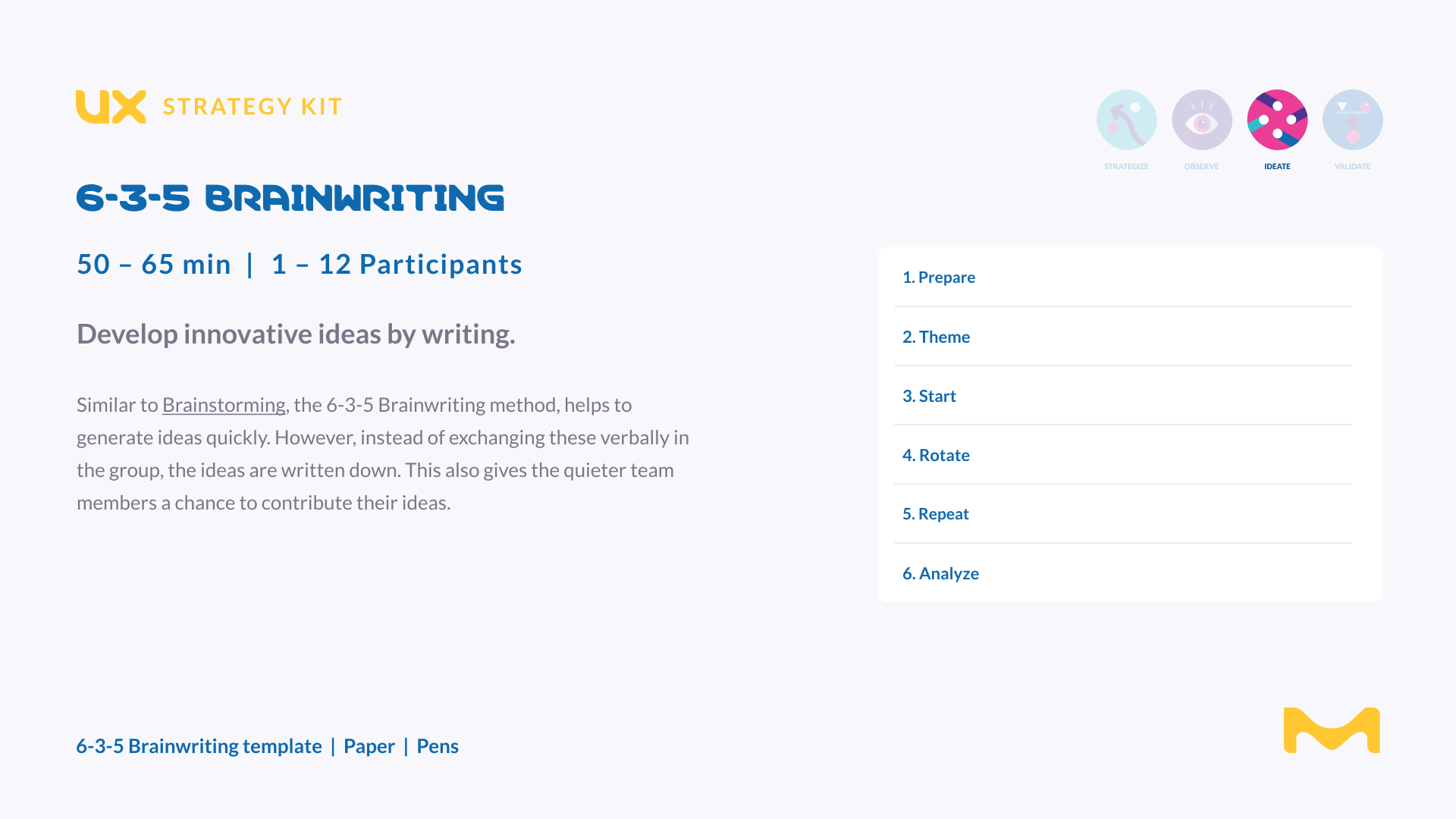
Similar to Brainstorming, the 6-3-5 Brainwriting method, helps to generate ideas quickly. However, instead of exchanging these verbally in the group, the ideas are written down. This also gives the quieter team members a chance to contribute their ideas.
Step-by-step
  1. Set up a meeting in a quiet environment. Each participant should have their own writing material, such as pens and paper or the 6-3-5 Brainwriting template.
  2. A theme can be determined before the brainwriting begins, as in the form of a How Might We question. For example: “How might we plan lunch breaks so that the canteen is not overcrowded?”.
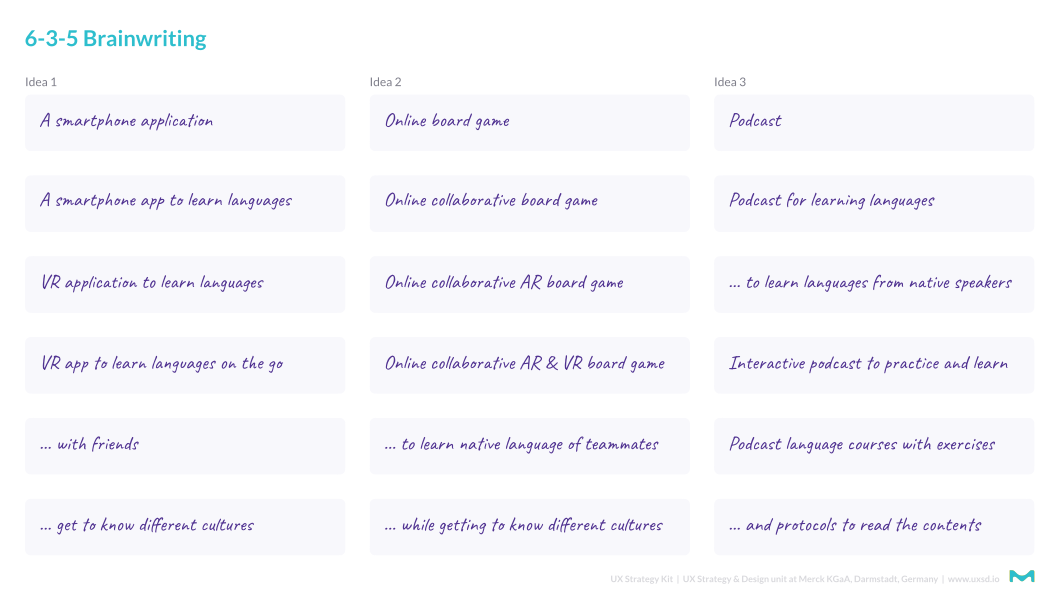
  3. Working individually, each participant writes down three ideas, each in its own vertical column on a paper or the worksheet, if provided. In total, this should take no longer than five minutes.
  4. Next, the ideas written down are passed on to the person sitting next to them. This person reads through the ideas carefully and completes each of them by writing down an evolved version of the same idea under the previous one.
  5. Repeat the process until the ideas return to their original authors, or rather five times.
  6. After the creative brainstorming process, the moderator takes the floor again and starts to analyze and evaluate the participants' ideas with them. This can breathe new life into the ideation process and dissolve blockages in thinking.
What you need
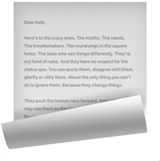
  • 6-3-5 Brainwriting template
External resources
  • Method 6-3-5 (BrainWriting)
    by linkmv97
Do you have a question?
These methods might seem simple, but applying them in a real project is another story. We’re there to help. If you have any questions, do not hesitate to get in touch with us at the User Experience Strategy & Design team.
Ask Away!
Explore similar methods
Concept Testing Planvalidate
3 – 5 Participants
60 – 120 min

A quick method for getting feedback from potential users on concepts.

SWOT Analysisstrategize
1 – 10 Participants
45 – 95 min

Question and analyze your project or business venture.

One-Minute-Pitchstrategize
2+ Participants
30 – 40 min

Break the concept down to the essential core points in the shortest time possible.

Storyboardsideate
2 – 8 Participants
10 – 30 min

A collection of scribbles to understand and show (inter)actions of users.

Touch Bluewarm-up
3 – 15 Participants
5 – 10 min

Encourage an communicative and energized atmosphere with this easy to understand warm-up game.

© Merck KGaA, Darmstadt, Germany, 2025.
Follow us
  • Dribbble
  • Instagram
  • Medium
  • Behance
Categories
  • Strategize
  • Observe
  • Ideate
  • Validate
  • Warm-up
Learn more
  • About Us
  • User Experience Strategy & Design
  • Liquid Design System
Legal
  • Data Privacy
  • Terms and Conditions
  • Imprint
Follow us
  • Dribbble
  • Instagram
  • Medium
  • Behance