
• All Methods
    • Strategize
      • 5D Framework
      • Break Down 4
      • Business Model Canvas
      • Competitive Analysis
      • Could, Should, Must
      • Dot Coding
      • Eisenhower Matrix
      • Future Trends
      • Golden Circle
      • HEART Framework
      • How Might We
      • Innovation Board
      • Ishikawa Diagram
      • Knowns and Unknowns Framework
      • KPI Tracking
      • Minimum Viable Product
      • One-Minute-Pitch
      • Stakeholder Map
      • SWOT Analysis
      • User Stories
      • Value Proposition
    • Observe
      • 5 Whys
      • 6 Thinking Hats
      • AEIOU Framework
      • Challenge Assumptions
      • Content Audit
      • Contextual Inquiry Plan
      • Emotional Journey Map
      • Empathy Map
      • Field Study
      • Focus Groups
      • Jobs-to-be-done
      • Journey Mapping
      • Mental Models
      • Mobile Diaries
      • Mystery Shopping
      • Netnography
      • Observation
      • Personas
      • Poems
      • Product Love Letters
      • Search-Log Analysis
      • Social Media Monitoring
      • Surveys
      • User Interviews
    • Ideate
      • 6-3-5 Brainwriting
      • Bodystorming
      • Brainstorming
      • Card Sorting
      • Collage
      • Crazy Eights
      • Dark Horse Prototyping
      • Mind Mapping
      • Moodboards
      • SCAMPER
      • Service Blueprints
      • Storyboards
      • Walt Disney Method
      • Worst Possible Ideas
      • Wow-How-Now Matrix
    • Validate
      • A/B Testing
      • Click Dummy
      • Concept Testing Plan
      • Eye Tracking
      • High-Fidelity Prototyping
      • Hypothesis Testing
      • Lessons Learned
      • Low-Fidelity Prototyping
      • Pluralistic Walkthrough
      • Poster Session
      • Remote Usability Test
      • User Testing
      • Wizard of Oz
      • World Café
    • Warm-up
      • 5 Whys
      • Brainstorming
      • Break Down 4
      • Crazy Eights
      • Destroy and Defend
      • Emoji Challenge
      • Hidden Similarities
      • Impromotion
      • Mind Mapping
      • Product Pitch
      • The Aliens Have Landed
      • Touch Blue
      • Two Truths and a Lie
      • Viewpoint Spectrogram
      • What's on your Desk?
  • Workshop Bundles
  • About us
  • Meet the Creators
  • Get Support
  1. UX Strategy Kit
  2. Methods
  3. Observation
beginnerobserve
ObservationReal insights from users in their natural environment.
30 – 180 min1+ Participantssoloreviewusers
+2
Open in FigJam
Summary
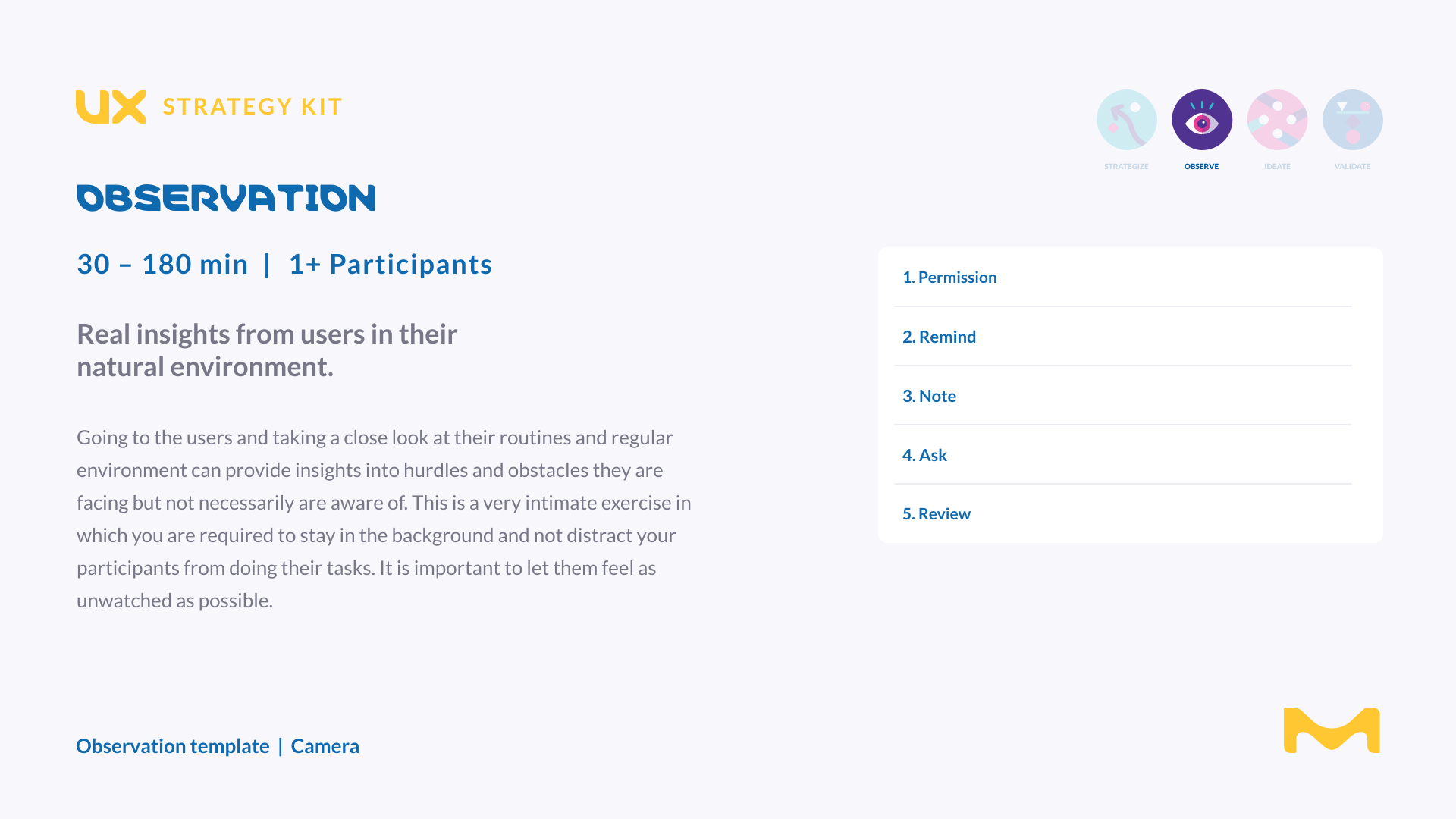
Going to the users and taking a close look at their routines and regular environment can provide insights into hurdles and obstacles they are facing but not necessarily are aware of. This is a very intimate exercise in which you are required to stay in the background and not distract your participants from doing their tasks. It is important to let them feel as unwatched as possible.
Step-by-step
  1. Remind your test candidates to work just like everyday. Remember to stay in the background (“fly on the wall”).
  2. Ask for a (written) recording permission. Since you might be recording sensitive material from their working environment.
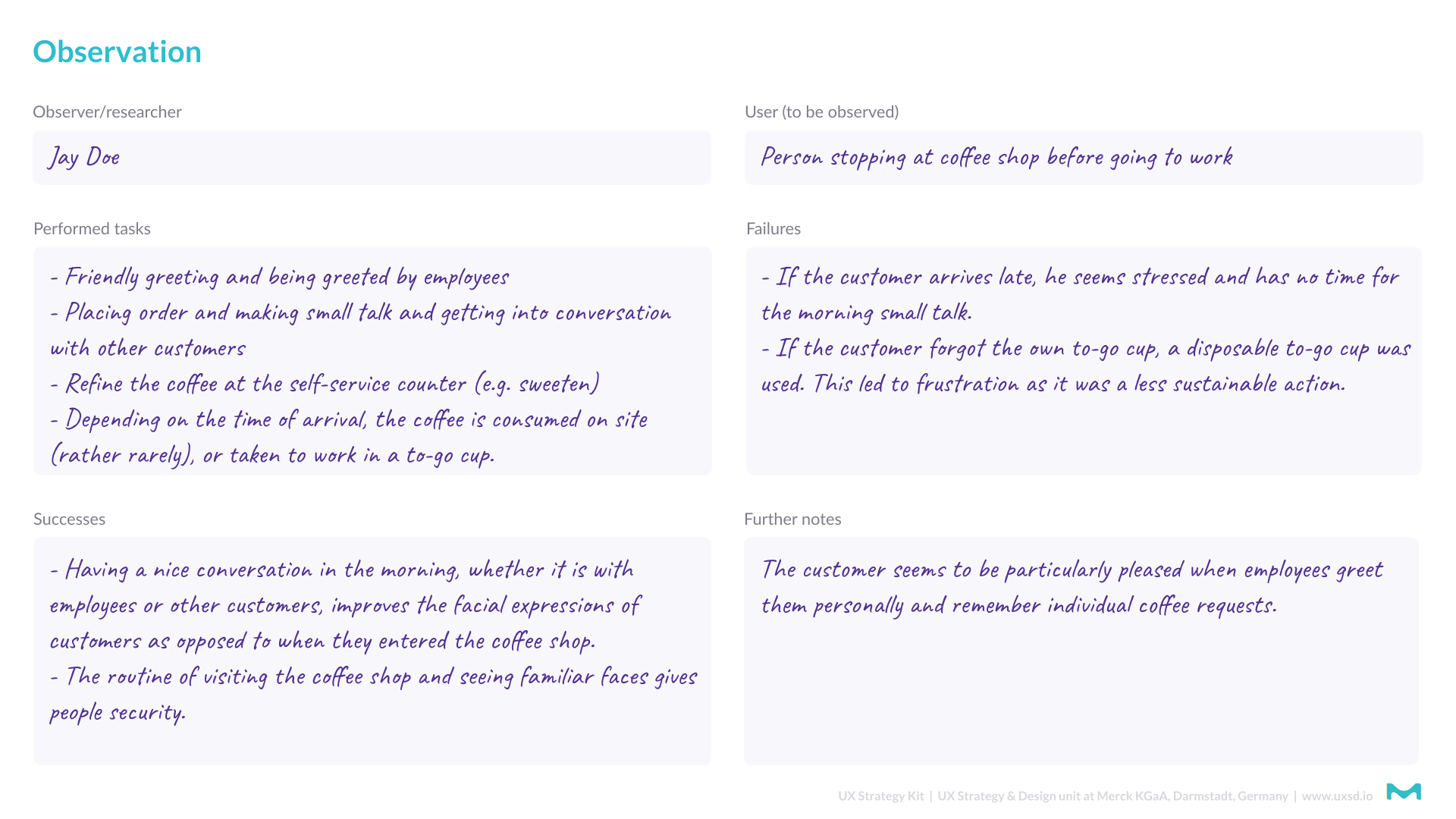
  3. Take note of all performed tasks, problems, successes, and failures. It is important to observe the little details that are too subtle or maybe also too obvious to be recognized by the test candidates themselves.
  4. If you want to ask questions, try not to ask them in a way that interrupts their workflows. Instead, wait for a good moment (e.g. a break) to ask your questions.
  5. Review and interpret your notes afterwards. It makes sense to go through your documentation together with your test candidate and try to understand the background or context. Share these with your team and discuss your findings.
What you need
  • Observation template
  • Camera
External resources
  • Research Methods: Observations (Sociology Theory & Methods)
    by tutor2u
Do you have a question?
These methods might seem simple, but applying them in a real project is another story. We’re there to help. If you have any questions, do not hesitate to get in touch with us at the User Experience Strategy & Design team.
Ask Away!
Explore similar methods
Poemsobserve
1+ Participants
60 – 120 min

Poems is great to structure your field research during user and environment observations.

Wizard of Ozvalidate
3+ Participants
50 – 80 min

Test new features.

Business Model Canvasstrategize
1+ Participants
50 – 65 min

Structure and plan business models.

Eye Trackingvalidate
5+ Participants
100 – 195 min

Track where users are looking to improve on the user experience.

Dark Horse Prototypingideate
2+ Participants
40 – 75 min

Develop innovations, by going new and previously unexplored ways.

© Merck KGaA, Darmstadt, Germany, 2025.
Follow us
  • Dribbble
  • Instagram
  • Medium
  • Behance
Categories
  • Strategize
  • Observe
  • Ideate
  • Validate
  • Warm-up
Learn more
  • About Us
  • User Experience Strategy & Design
  • Liquid Design System
Legal
  • Data Privacy
  • Terms and Conditions
  • Imprint
Follow us
  • Dribbble
  • Instagram
  • Medium
  • Behance