
• All Methods
    • Strategize
      • 5D Framework
      • Break Down 4
      • Business Model Canvas
      • Competitive Analysis
      • Could, Should, Must
      • Dot Coding
      • Eisenhower Matrix
      • Future Trends
      • Golden Circle
      • HEART Framework
      • How Might We
      • Innovation Board
      • Ishikawa Diagram
      • Knowns and Unknowns Framework
      • KPI Tracking
      • Minimum Viable Product
      • One-Minute-Pitch
      • Stakeholder Map
      • SWOT Analysis
      • User Stories
      • Value Proposition
    • Observe
      • 5 Whys
      • 6 Thinking Hats
      • AEIOU Framework
      • Challenge Assumptions
      • Content Audit
      • Contextual Inquiry Plan
      • Emotional Journey Map
      • Empathy Map
      • Field Study
      • Focus Groups
      • Jobs-to-be-done
      • Journey Mapping
      • Mental Models
      • Mobile Diaries
      • Mystery Shopping
      • Netnography
      • Observation
      • Personas
      • Poems
      • Product Love Letters
      • Search-Log Analysis
      • Social Media Monitoring
      • Surveys
      • User Interviews
    • Ideate
      • 6-3-5 Brainwriting
      • Bodystorming
      • Brainstorming
      • Card Sorting
      • Collage
      • Crazy Eights
      • Dark Horse Prototyping
      • Mind Mapping
      • Moodboards
      • SCAMPER
      • Service Blueprints
      • Storyboards
      • Walt Disney Method
      • Worst Possible Ideas
      • Wow-How-Now Matrix
    • Validate
      • A/B Testing
      • Click Dummy
      • Concept Testing Plan
      • Eye Tracking
      • High-Fidelity Prototyping
      • Hypothesis Testing
      • Lessons Learned
      • Low-Fidelity Prototyping
      • Pluralistic Walkthrough
      • Poster Session
      • Remote Usability Test
      • User Testing
      • Wizard of Oz
      • World Café
    • Warm-up
      • 5 Whys
      • Brainstorming
      • Break Down 4
      • Crazy Eights
      • Destroy and Defend
      • Emoji Challenge
      • Hidden Similarities
      • Impromotion
      • Mind Mapping
      • Product Pitch
      • The Aliens Have Landed
      • Touch Blue
      • Two Truths and a Lie
      • Viewpoint Spectrogram
      • What's on your Desk?
  • Workshop Bundles
  • About us
  • Meet the Creators
  • Get Support
  1. UX Strategy Kit
  2. Methods
  3. Stakeholder Map
Stakeholder Map - Slide 1
Stakeholder Map - Slide 2
Stakeholder Map - Slide 3
Stakeholder Map - Slide 4
Stakeholder Map - Slide 5
Stakeholder Map - Slide 6
Stakeholder Map - Slide 7
beginner strategize
Stakeholder Map
Stakeholder Map Understand who can influence the product or could be affected by it.
4 – 8 h 1+ Participants workshop solo brainstorming
+1
research
Open in FigJam
Summary
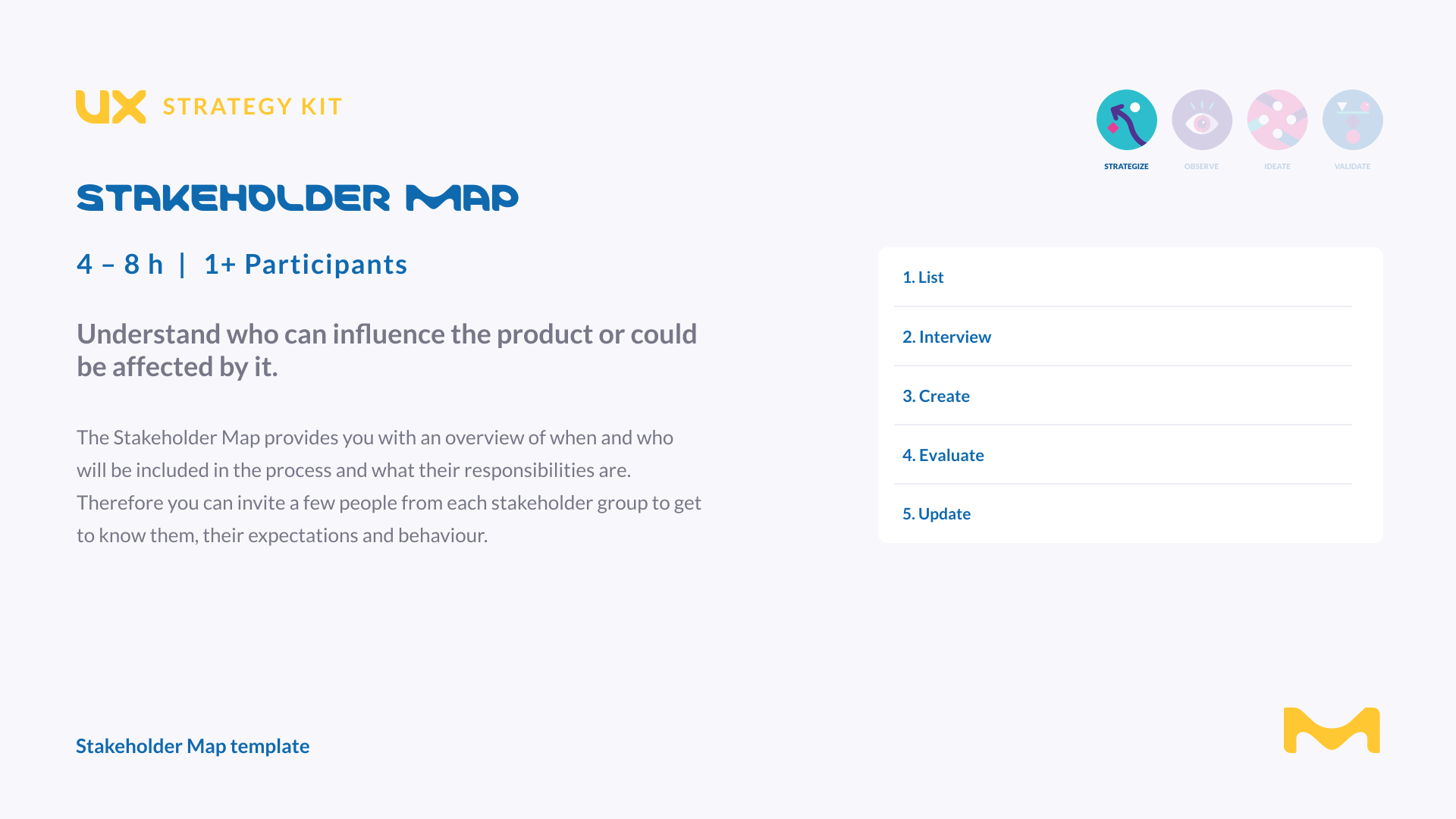
The Stakeholder Map provides you with an overview of when and who will be included in the process and what their responsibilities are. Therefore you can invite a few people from each stakeholder group to get to know them, their expectations and behaviour.
Step-by-step
  1. List up all stakeholders involved or a selection of stakeholders that work as representatives for each group.
  2. Conduct interviews with all fractions and get to know their thoughts, desires, pain points, and responsibilities.
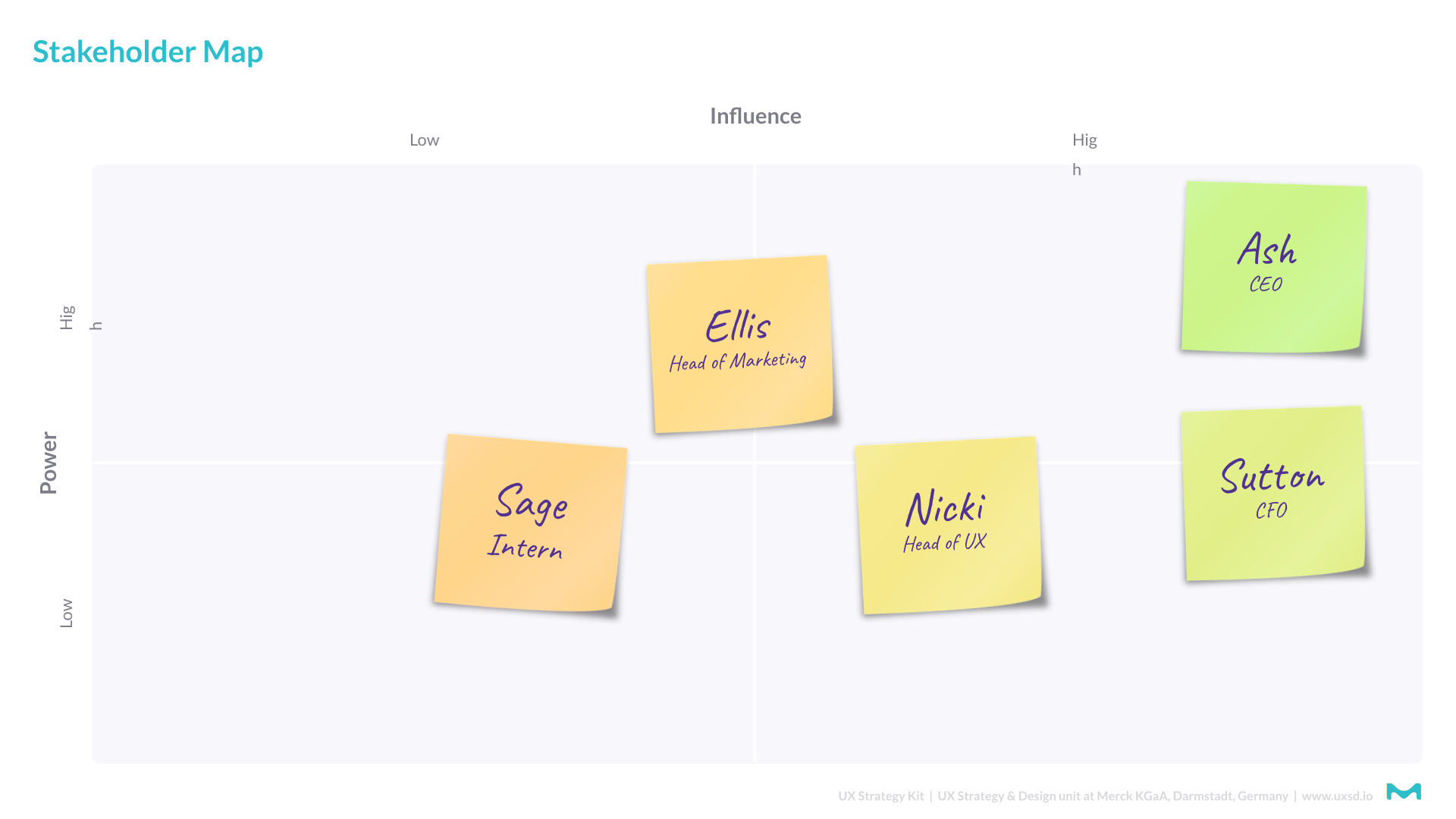
  3. Use the Stakeholder Map template to create a visual overview of all involved parties and their correlations.
  4. You can now plan how to manage each stakeholder's expectations and at which point they want or need to be involved into your own process.
  5. Keep your Stakeholder Map up-to-date as some roles might change over time.

What you need
  • Stakeholder Map template
External resources
  • Stakeholders and Stakeholder Mapping
    by tutor2u
Do you have a question?
These methods might seem simple, but applying them in a real project is another story. We're there to help. If you have any questions, do not hesitate to get in touch with us at the User Experience Strategy & Design team.
Ask Away!
Explore similar methods
Break Down 4
Break Down 4 strategize
1+ Participants
15 – 20 min

Break down complex topics to make them understandable for everyone.

SWOT Analysis
SWOT Analysis strategize
1 – 10 Participants
45 – 95 min

Question and analyze your project or business venture.

One-Minute-Pitch
One-Minute-Pitch strategize
2+ Participants
30 – 40 min

Break the concept down to the essential core points in the shortest time possible.

How Might We
How Might We strategize
2+ Participants
30 – 60 min

An essential method to summarize research insights in a constructive way.

Business Model Canvas
Business Model Canvas strategize
1+ Participants
50 – 65 min

Structure and plan business models.

© Merck KGaA, Darmstadt, Germany, 2026.
Follow us
  • Dribbble
  • Instagram
  • Medium
  • Behance
Categories
  • Strategize
  • Observe
  • Ideate
  • Validate
  • Warm-up
Learn more
  • About Us
  • User Experience Strategy & Design
  • Liquid Design System
Legal
  • Data Privacy
  • Terms and Conditions
  • Imprint
  • Cookie Settings
Follow us
  • Dribbble
  • Instagram
  • Medium
  • Behance

We use cookies to improve your experience. Learn more