
• All Methods
    • Strategize
      • 5D Framework
      • Break Down 4
      • Business Model Canvas
      • Competitive Analysis
      • Could, Should, Must
      • Dot Coding
      • Eisenhower Matrix
      • Future Trends
      • Golden Circle
      • HEART Framework
      • How Might We
      • Innovation Board
      • Ishikawa Diagram
      • Knowns and Unknowns Framework
      • KPI Tracking
      • Minimum Viable Product
      • One-Minute-Pitch
      • Stakeholder Map
      • SWOT Analysis
      • User Stories
      • Value Proposition
    • Observe
      • 5 Whys
      • 6 Thinking Hats
      • AEIOU Framework
      • Challenge Assumptions
      • Content Audit
      • Contextual Inquiry Plan
      • Emotional Journey Map
      • Empathy Map
      • Field Study
      • Focus Groups
      • Jobs-to-be-done
      • Journey Mapping
      • Mental Models
      • Mobile Diaries
      • Mystery Shopping
      • Netnography
      • Observation
      • Personas
      • Poems
      • Product Love Letters
      • Search-Log Analysis
      • Social Media Monitoring
      • Surveys
      • User Interviews
    • Ideate
      • 6-3-5 Brainwriting
      • Bodystorming
      • Brainstorming
      • Card Sorting
      • Collage
      • Crazy Eights
      • Dark Horse Prototyping
      • Mind Mapping
      • Moodboards
      • SCAMPER
      • Service Blueprints
      • Storyboards
      • Walt Disney Method
      • Worst Possible Ideas
      • Wow-How-Now Matrix
    • Validate
      • A/B Testing
      • Click Dummy
      • Concept Testing Plan
      • Eye Tracking
      • High-Fidelity Prototyping
      • Hypothesis Testing
      • Lessons Learned
      • Low-Fidelity Prototyping
      • Pluralistic Walkthrough
      • Poster Session
      • Remote Usability Test
      • User Testing
      • Wizard of Oz
      • World Café
    • Warm-up
      • 5 Whys
      • Brainstorming
      • Break Down 4
      • Crazy Eights
      • Destroy and Defend
      • Emoji Challenge
      • Hidden Similarities
      • Impromotion
      • Mind Mapping
      • Product Pitch
      • The Aliens Have Landed
      • Touch Blue
      • Two Truths and a Lie
      • Viewpoint Spectrogram
      • What's on your Desk?
  • Workshop Bundles
  • About us
  • Meet the Creators
  • Get Support
  1. UX Strategy Kit
  2. Methods
  3. Netnography
beginnerobserve
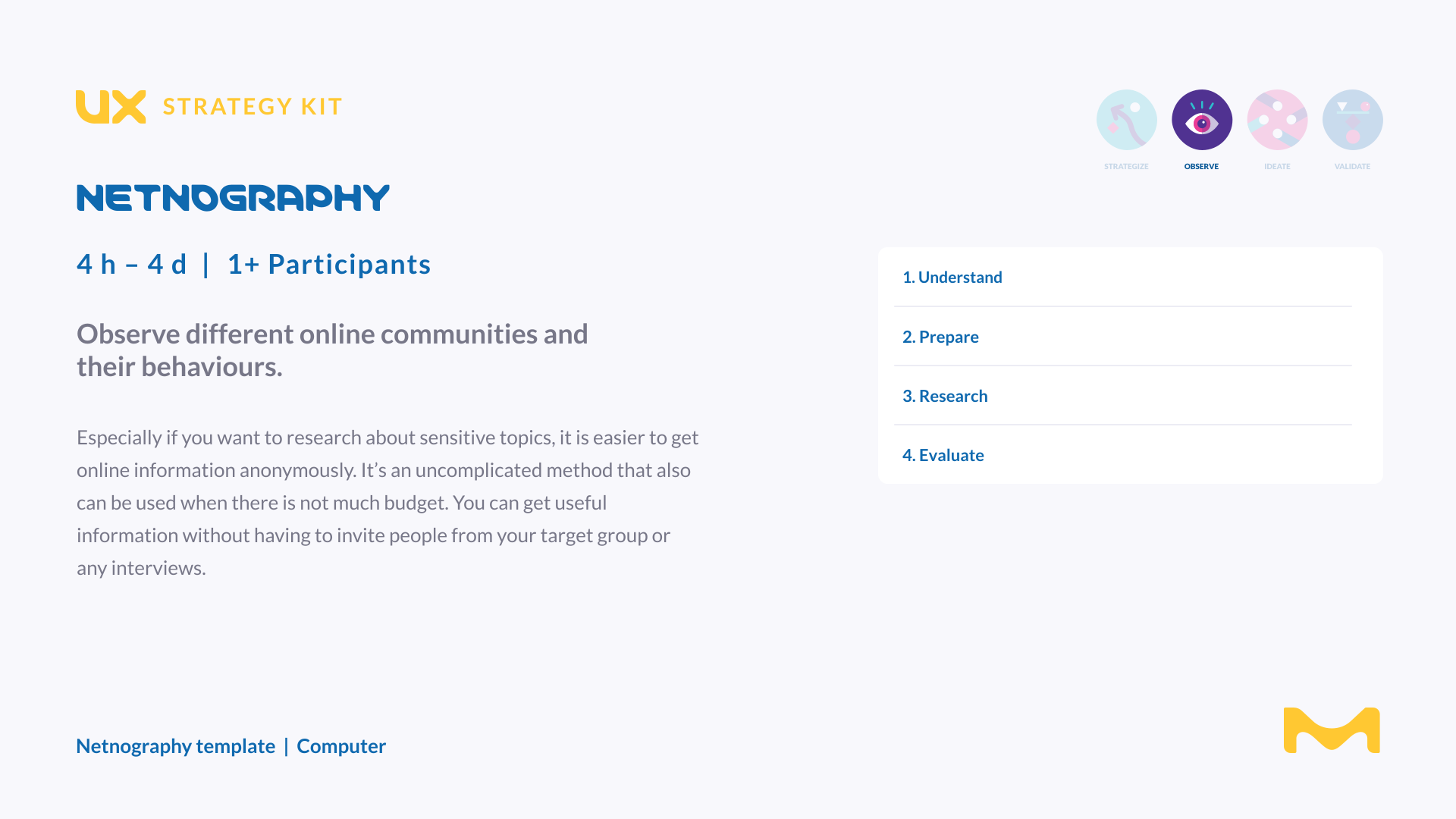
NetnographyObserve different online communities and their behaviours.
4 h – 4 d1+ Participantsuserstextresearch
+1
Open in FigJam
Summary
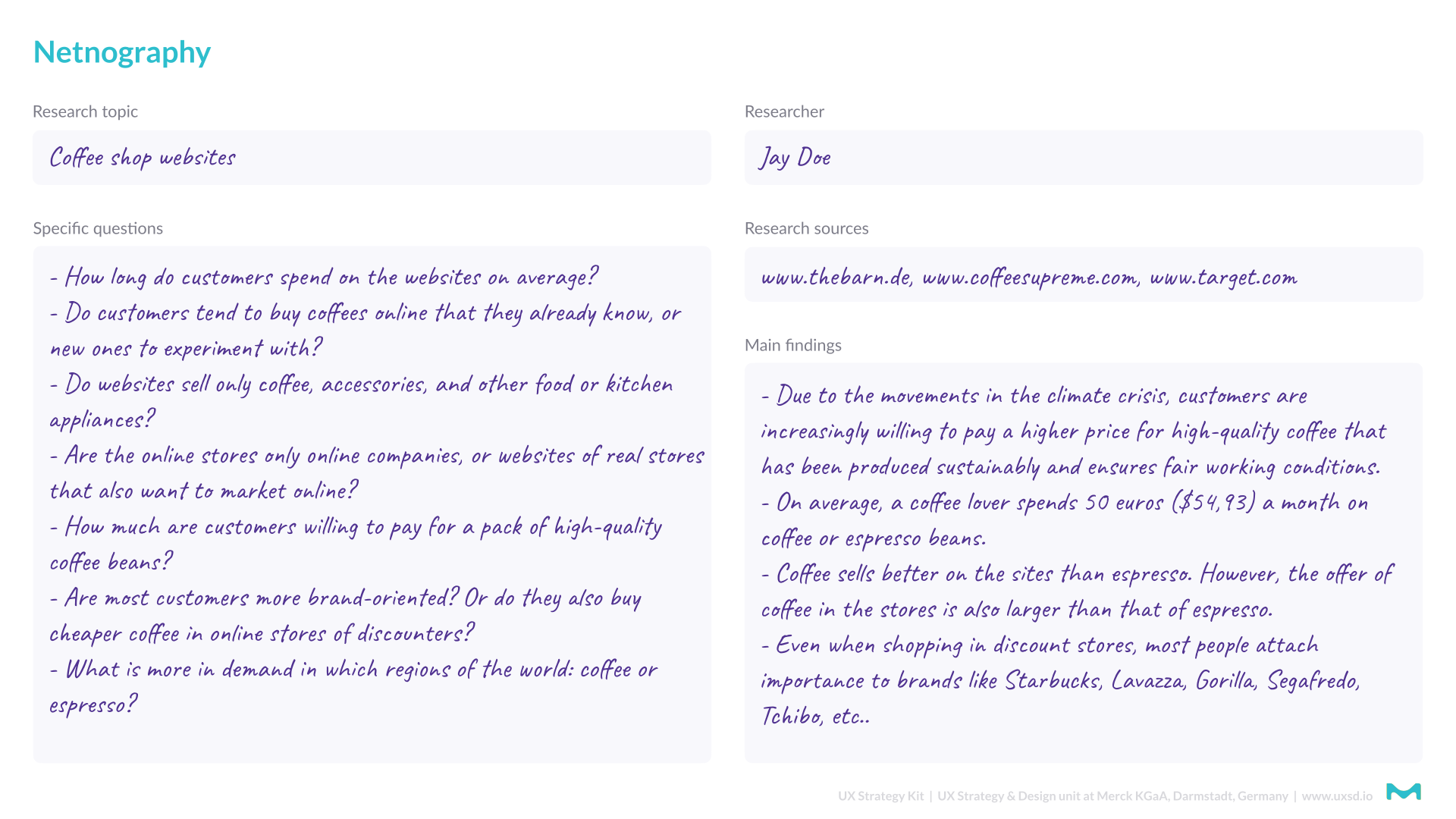
Especially if you want to research about sensitive topics, it is easier to get online information anonymously. It’s an uncomplicated method that also can be used when there is not much budget. You can get useful information without having to invite people from your target group or any interviews.
Step-by-step
  1. Understand your research topic. Think about creating hypotheses first. It is important to really get a grip of the topic before starting the research so that it can be as effective as possible.
  2. Make yourself a list if you want to answer special questions. This list can act as your guideline during the Netnography session, similar to a questionnaire.
  3. Start the research session by using search engines or community platforms. Social media can also be a great source. Make sure to not only rely on independent statements but rather try to document a broad opinion based on many different voices from different platforms.
  4. Discuss your findings within your team. Maybe you can even compare different Netnography studies with each other. Sum them together and reduce the content to insights or statements that are most important to you.

What you need
  • Netnography template
  • Computer
External resources
  • Netnography: Robert Kozinets
    by USC Annenberg
Do you have a question?
These methods might seem simple, but applying them in a real project is another story. We’re there to help. If you have any questions, do not hesitate to get in touch with us at the User Experience Strategy & Design team.
Ask Away!
Explore similar methods
Mental Modelsobserve
1+ Participants
20 min – 2 d

Match with your user's expectations.

Break Down 4strategize
1+ Participants
15 – 20 min

Break down complex topics to make them understandable for everyone.

Minimum Viable Productstrategize
4 – 8 Participants
2 – 4 months

Solve the core problem of the target group under minimal conditions.

Moodboardsideate
1+ Participants
60 – 90 min

Visualize your ideas fast and early in your research phase.

Poster Sessionvalidate
5+ Participants
50 – 95 min

Present ideas, concepts, and insights in a visually appealing way.

© Merck KGaA, Darmstadt, Germany, 2025.
Follow us
  • Dribbble
  • Instagram
  • Medium
  • Behance
Categories
  • Strategize
  • Observe
  • Ideate
  • Validate
  • Warm-up
Learn more
  • About Us
  • User Experience Strategy & Design
  • Liquid Design System
Legal
  • Data Privacy
  • Terms and Conditions
  • Imprint
Follow us
  • Dribbble
  • Instagram
  • Medium
  • Behance